AP

AP Physics 1 Exam Prep with an AI Tutor

AP Physics 1 is the College Board's algebra-based introductory physics exam, covering kinematics through waves and simple circuits, scored 1-5. This page maps the units and weightings, breaks down the exam's experimental-design-heavy format, and shows how OmniTutor's AI tutor targets your specific error patterns.

omnitutor.live
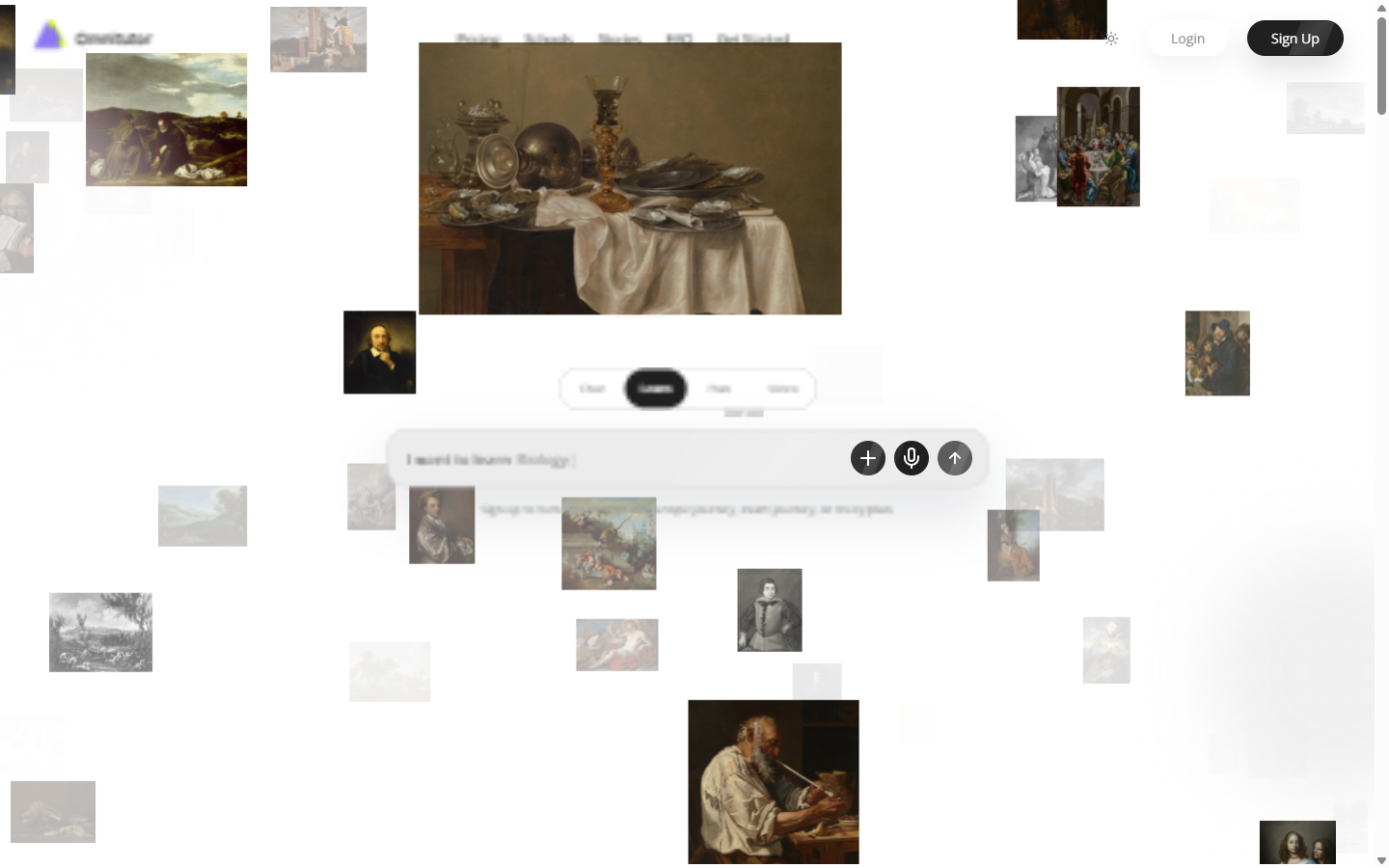
The OmniTutor study hub with the AI prompt bar

The OmniTutor study hub — ask anything, get a course.

50,000+Learners
1.2MAI lessons
4.9/5Learner rating
28Exams covered

How it works

An AI tutor that actually tutors.

1

Ask anything

Stuck at 11pm before a test? Ask in chat or by voice. Answers are worked to your exam's style — not generic textbook copy.

2

Watch it explained

Every topic can become a short video lesson, generated for your chapter — with real examples and diagrams.

3

Follow a plan that adapts

A daily plan built from your syllabus's weightage. Miss a day? It rebalances instead of guilt-tripping.

The exam is 3 hours: 50 multiple-choice questions (45 single-select, 5 multi-select) in 90 minutes and 5 free-response questions in 90 minutes, including one experimental design and one qualitative-quantitative translation question.

AP Physics 1 is famous for low score distributions — typically under 10% earn a 5 — because questions test multi-step reasoning, not plug-and-chug. That makes structured practice with feedback the highest-leverage study activity.

What units are on AP Physics 1 and how are they weighted?

Kinematics (10-15%), Force and Translational Dynamics (18-23%), Work, Energy, and Power (18-23%), Linear Momentum (10-15%), Torque and Rotational Dynamics (10-15%), Energy and Momentum of Rotating Systems (5-8%), Oscillations (5-8%), and Fluids (10-15%) — fluids joined the course in the 2024-25 revision.

Dynamics and energy together approach half the exam, so free-body diagrams and energy bar charts deserve the most reps. OmniTutor's diagnostic mirrors the official weighting when it builds your plan.
Why is AP Physics 1 considered so hard?

Three reasons: questions combine 2-3 concepts in one problem, the wrong-answer choices are built from common student errors, and there is no equation sheet rescue — the provided constants and equations only help if you already know when they apply.

The fix is error-pattern practice. When every missed question tells you whether you mis-drew a force, applied the wrong principle, or botched algebra, you can attack the actual cause. OmniTutor tags every mistake this way and re-drills the pattern.

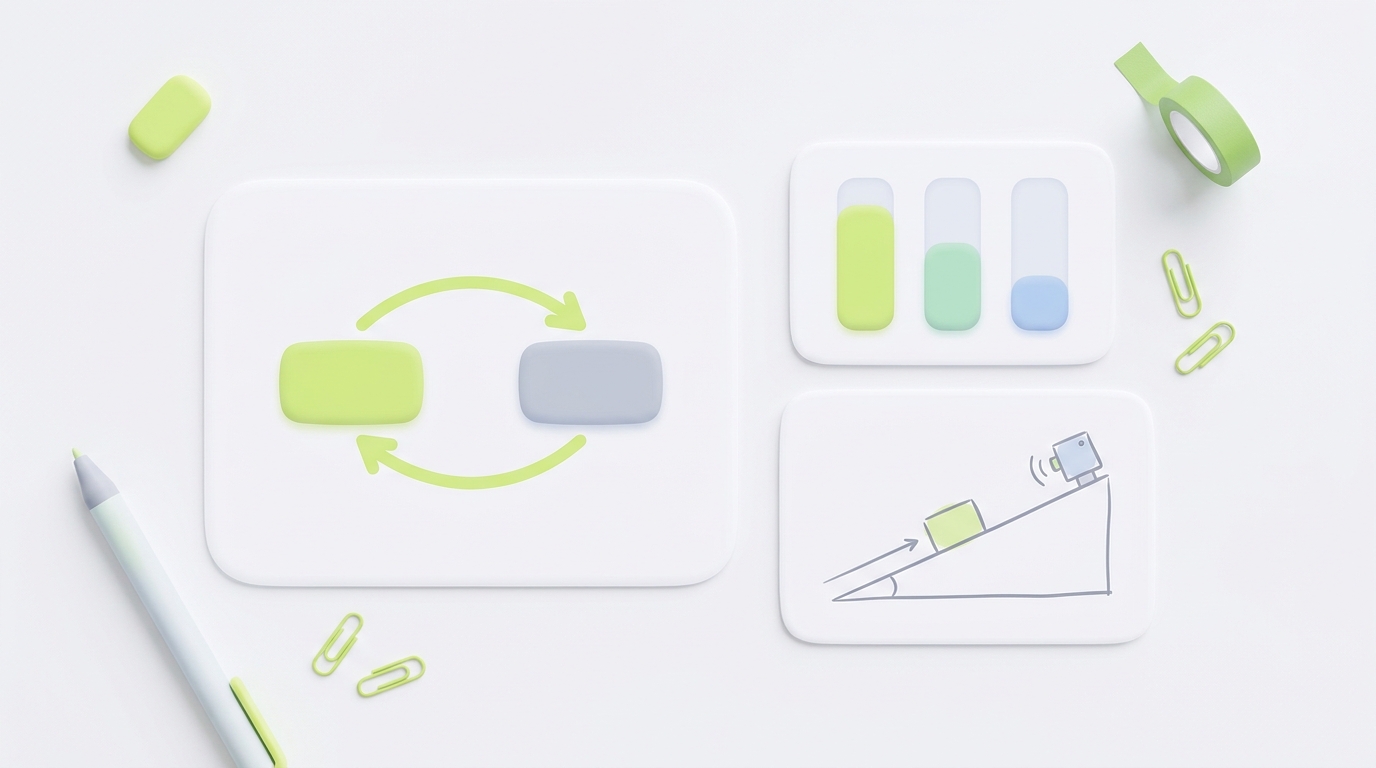
AP Physics 1 notes with free-body diagrams and energy bar charts

What is the AP Physics 1 experimental design FRQ?

One FRQ always asks you to design a procedure: choose equipment, describe steps, identify what to measure and how, and explain how the data answers the question. Another, the paragraph-length response, requires a coherent written argument in prose.

Both are gradable skills you can train — templates exist for design answers (quantities, procedure, analysis, reduction of uncertainty) and rubric-style feedback on practice attempts builds the reflexes. OmniTutor's FRQ drills include both types with point-by-point feedback.

How should you prepare for AP Physics 1?

Prioritise deep fluency in the big four — kinematics graphs, Newton's laws with friction and inclined planes, energy conservation, and momentum conservation — before touching later units, because every later topic reuses them. Then interleave: mixed problem sets beat blocked chapter sets for retention.

From 8 weeks out, add weekly timed sections and full FRQ sets. Track misses by error type, not just topic; students who fix their top two error types typically see the largest score jumps.

OmniTutor product view

Is AP Physics 1 or C harder?

Physics C (Mechanics and E&M) uses calculus and goes deeper; Physics 1 is algebra-based but conceptually tricky with harsher curves relative to preparation time. If you are concurrently in calculus and need engineering credit, C is the better target; for life-science paths or a first physics course, 1 is the right on-ramp.

Learners

They kept going. It shows.

★★★★★

First attempt I knew the content but not the exam. This year I drilled only experimental-design FRQs for two weeks with point-by-point feedback — that was the whole difference.
Ravi K.AP Physics 1, 4 to 5 on retake · New JerseyAP Physics 1

★★★★★

The error tagging showed me 70% of my misses were drawing the normal force wrong on inclines. One fixed habit and my dynamics score band jumped.
Tessa M.AP Physics 1 · DenverAP Physics 1

★★★★★

Energy bar charts as videos finally made conservation visual. I stopped memorizing which energies go where and started deriving it.
Omar H.Junior · HoustonAP Physics 1

Questions

Asked before you did.

Historically around 40-45% of students earn a 3 or higher, and fewer than 10% earn a 5 — among the lowest distributions of any AP exam. The exam rewards conceptual depth and multi-step reasoning, so scores climb quickly once practice targets error patterns instead of raw question volume.

No — it is strictly algebra and trigonometry. You will manipulate equations, work with ratios and proportional reasoning, and read graphs intensively. What replaces calculus difficulty is conceptual difficulty: questions ask why a graph changes shape, not just what a slope equals.

Yes — a 4 places you above roughly three-quarters of test-takers and earns credit at most colleges for algebra-based physics. If you are targeting engineering programs specifically, note that many require calculus-based Physics C credit instead; check your department's AP table.

3 hours total: 90 minutes for 50 multiple-choice questions and 90 minutes for 5 free-response questions covering mathematical routines, translation between representations, experimental design, and qualitative reasoning. Pacing practice on FRQs matters — 18 minutes per question goes fast when design answers require planning.

Yes — every practice FRQ comes back with rubric-style, point-by-point feedback, and the experimental-design questions get coaching on the procedure template. When a concept itself is shaky, a whiteboard-style video explains it in a couple of minutes, then the drill re-tests it.

Start AP prep free tonight.

Free to start, no card needed. Your first AI course is minutes away.

Start free