CBSE

CBSE Class 12 Syllabus 2026-27 and Board Exam Preparation

This page maps the CBSE Class 12 syllabus for 2026-27 across physics, chemistry, mathematics, biology, English, and the elective streams, with the board pattern, sample papers, and a month-by-month revision plan. It is for Class 12 students managing boards alongside JEE, NEET, or CUET.

omnitutor.live
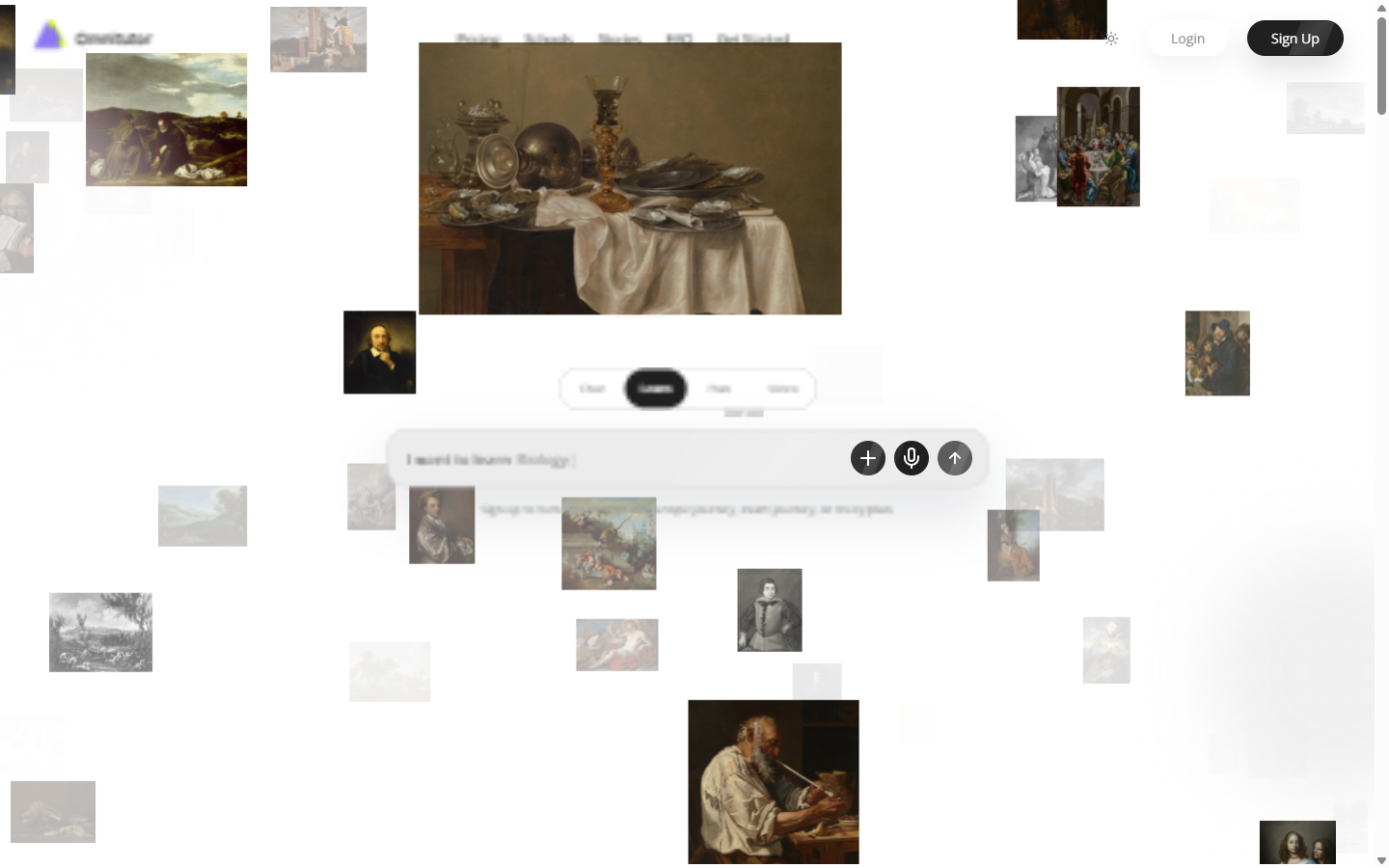
The OmniTutor study hub with the AI prompt bar

The OmniTutor study hub — ask anything, get a course.

50,000+Learners
1.2MAI lessons
4.9/5Learner rating
28Exams covered

How it works

An AI tutor that actually tutors.

1

Ask anything

Stuck at 11pm before a test? Ask in chat or by voice. Answers are worked to your exam's style — not generic textbook copy.

2

Watch it explained

Every topic can become a short video lesson, generated for your chapter — with real examples and diagrams.

3

Follow a plan that adapts

A daily plan built from your syllabus's weightage. Miss a day? It rebalances instead of guilt-tripping.

Class 12 marks still decide Delhi University cut-offs, CUET preparation baselines, and eligibility for many colleges. Boards run February to April, results arrive around May, and compartment exams follow in the same cycle. Passing needs 33 percent per subject, with internal assessment contributing 20 marks in most papers.

Most Class 12 students prepare for a competitive exam in parallel. OmniTutor keeps one calendar for both: school chapters with board-style answers and competency questions, JEE or NEET-level practice on the same chapters, and mocks scheduled so boards peak in February, not before.

What is the CBSE Class 12 syllabus for 2026-27?

English core is compulsory; science students add physics and chemistry plus mathematics or biology; commerce adds accountancy, business studies, and economics; humanities run history, political science, geography, psychology, and more. Each subject follows the rationalised NCERT textbooks with a published CBSE syllabus and unit weightage.

Assessment splits by subject: sciences carry 70-mark theory plus 30 marks of practicals, mathematics and most humanities subjects carry 80-mark theory plus 20 internal marks. The split matters for planning — practicals happen at school in January, and weak practical files are marks surrendered before the theory paper is even printed.


What is the Class 12 board exam pattern for 2026?

Theory papers run three hours between mid-February and early April, with roughly half the paper competency-based — case studies, assertion-reason, and source-based items — and the rest split between objective and long-answer questions. Passing needs 33 percent per subject, theory and internal combined.

CBSE releases subject-wise sample papers and marking schemes each academic year. They are the ground truth for question styling and step-wise mark distribution, and every serious revision plan should include them from December onward, graded honestly against the official scheme.

CBSE Class 12 syllabus and board exam preparation on OmniTutor

How should the Class 12 year be planned?

April to October is first-pass completion with a test per chapter; November and December bring the first full revision plus practical files and viva preparation; December and January run pre-boards; January and February are for sample papers, past papers, and the second revision. New content after January is usually a net loss.

OmniTutor encodes exactly this: enter the board dates and the plan schedules chapter learning, spaced revision, mock papers, and recovery quizzes for weak topics, rebalancing weekly as pre-boards reveal what actually needs the remaining time rather than what feels urgent.

How do sample papers and previous years’ questions help in Class 12?

Boards repeat structure, not questions: the sample paper defines the current structure, and previous years’ papers show the range within it. Together they train the three skills the paper tests — question selection, time allocation across sections, and writing answers that match the marking scheme’s step distribution.

Practise full papers under exam timing, then mark yourself with the scheme and log every lost mark by cause: concept gap, presentation gap, or time pressure. Three cycles of that loop in January typically move scores more than any new material.

OmniTutor product view

How do you balance boards with JEE, NEET, or CUET?

The syllabi overlap heavily, but the formats differ: boards reward written steps, keywords, and diagrams; JEE and NEET reward speed on the same concepts in objective form. Study the concept once, then practise both formats deliberately — board answer-writing is a separate skill from solving an MCQ quickly.

CUET adds a third layer because it follows boards within weeks. Its domain sections draw on the same NCERT Class 12 content, so January board revision doubles as CUET preparation if MCQ practice runs alongside. One calendar covering all three beats three conflicting timetables.

Which mistakes cost marks in Class 12 boards?

The usual suspects: skipping steps in maths and losing method marks, writing physics derivations without the defining diagram, answering biology without labelled diagrams, and missing chemistry keywords like names of reactions and conditions. Each costs 10-plus marks across a paper.

Add the administrative ones: neglecting practical files and viva, ignoring internal assessment components, and leaving revision of the last two chapters for the gap between papers. Boards are won on margins; these margins are fully controllable by December, before the date sheet compresses every week.

OmniTutor product view

How does OmniTutor help in Class 12?

Chapter videos rebuild any concept a school lecture lost, adaptive practice serves board-style and competitive questions on the same syllabus, and mock papers run in exam-room mode with delayed scoring. Every wrong answer schedules recovery work, so weak chapters get repaired instead of avoided.

With an exam date set, the countdown shifts automatically: diagnostics early, timed practice mid-cycle, full simulations near the papers. JEE, NEET, CUET, and board dates coexist on one plan, which is the only honest way to run the year. One calendar, no silent collisions.

Learners

They kept going. It shows.

★★★★★

Boards and NEET on one calendar sounded impossible, but the plan schedules board answer practice and NEET MCQs on the same chapter. Prelab mock scores are up in both.
PriyaClass 12 PCB student, LucknowCBSE Class 12

★★★★★

Step-level feedback on my maths answers showed I was jumping two marks of working per question. Fixing that alone was worth ten marks in the pre-board paper.
AdityaClass 12 PCM student, DelhiCBSE Class 12

★★★★★

The physics derivation videos with the diagram built line by line changed how I write electrostatics answers. My teacher circled the exact figures in my pre-board copy.
ZoyaClass 12 student, KolkataCBSE Class 12

Questions

Asked before you did.

For most subjects, yes — board papers are set from NCERT, and in chemistry and biology the textbook lines are the model answers. Add NCERT Exemplar and previous years’ papers for maths and physics depth. Reference books help at the margins; they do not replace the source.

33 percent in each subject, combining theory and internal or practical marks, with at least 33 percent separately in theory where the syllabus specifies it. A subject failed means compartment, held weeks after results; failing two or more means repeating the year.

Five is the standard count — English plus four electives — with some students carrying a sixth. Papers span mid-February to early April depending on the date sheet. The best-of rules for aggregates can apply, so every subject deserves real preparation, not just the favourite ones.

Typically in May, roughly two months after the last paper. The same result feeds CUET preparation morale and college form deadlines, which is why February performance matters beyond the marks themselves. Compartment exams follow within weeks of results. Plan the summer around that gap.

30 marks per science subject — experiments, file work, and viva conducted at school, usually in January. They are the most predictable 30 marks of the year, and students who leave files to the last week routinely lose five or more of them.

Yes, because the syllabus overlaps; only the question formats differ. Learn each concept once, then split practice: board-style written answers and competency items on one side, timed MCQs and numericals on the other. One integrated plan is what keeps both from collapsing in January.

Start CBSE prep free tonight.

Free to start, no card needed. Your first AI course is minutes away.

Start free