CBSE

CBSE Class 9 Syllabus 2026-27: Chapters, Notes, and Practice

This page covers the CBSE Class 9 syllabus for the 2026-27 session chapter by chapter — mathematics, science, social science, English, and Hindi — along with notes, NCERT solutions, and practice. It is for Class 9 students who want structured preparation, and for parents checking what the year demands.

omnitutor.live
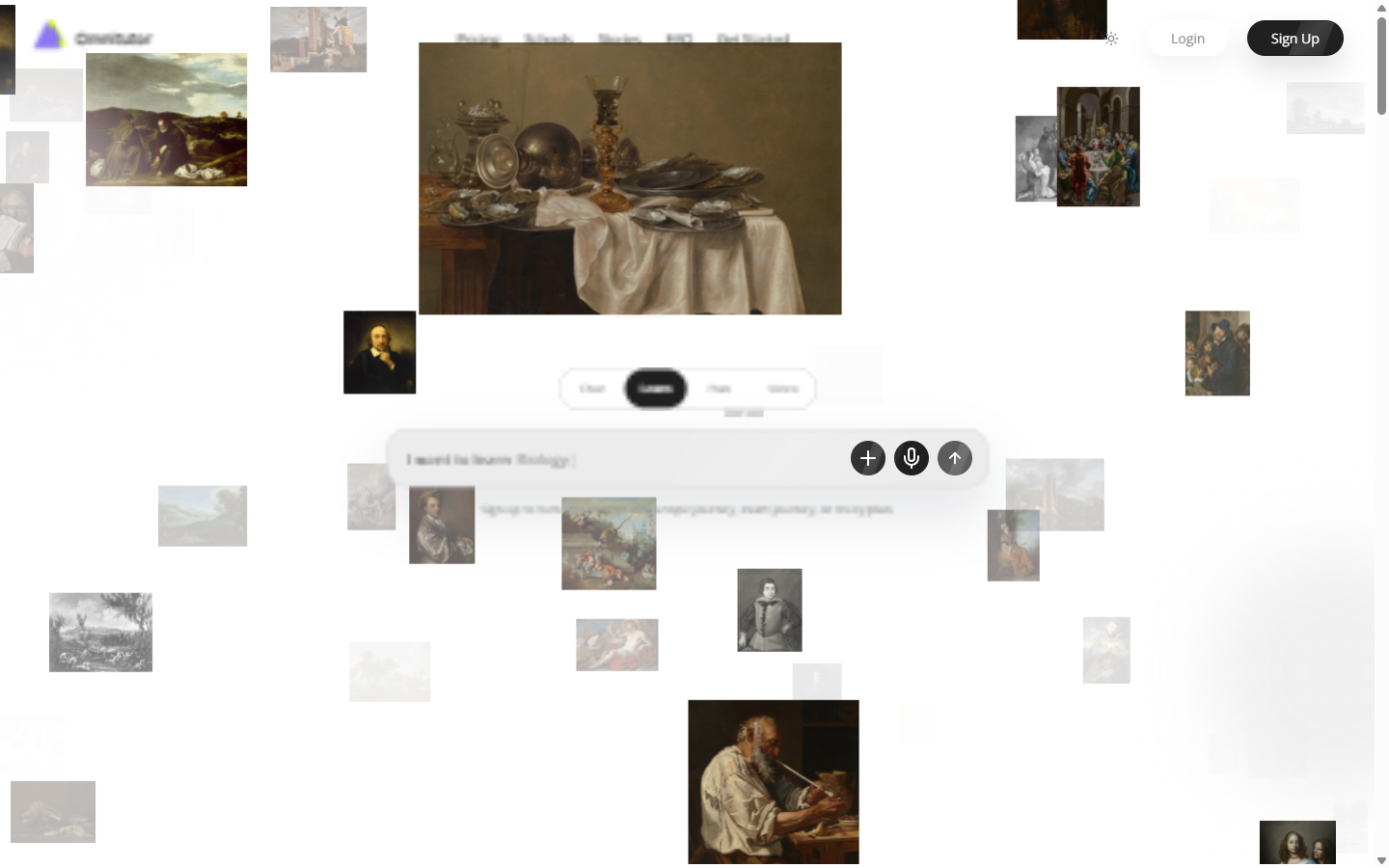
The OmniTutor study hub with the AI prompt bar

The OmniTutor study hub — ask anything, get a course.

50,000+Learners
1.2MAI lessons
4.9/5Learner rating
28Exams covered

How it works

An AI tutor that actually tutors.

1

Ask anything

Stuck at 11pm before a test? Ask in chat or by voice. Answers are worked to your exam's style — not generic textbook copy.

2

Watch it explained

Every topic can become a short video lesson, generated for your chapter — with real examples and diagrams.

3

Follow a plan that adapts

A daily plan built from your syllabus's weightage. Miss a day? It rebalances instead of guilt-tripping.

Class 9 has no board exam, but it sets up everything that follows. Number systems, polynomials, motion, force, atoms, and tissues reappear in Class 10 papers and again across JEE and NEET syllabi. Gaps built this year compound quickly in Classes 10 and 11.

OmniTutor turns the syllabus into a week-by-week plan: whiteboard-style explainer videos for each concept, adaptive practice after every chapter, and quizzes that flag weak topics for recovery. Ask a doubt at 11 pm and get a worked explanation, not a link.

What is the CBSE Class 9 syllabus for 2026-27?

CBSE prescribes a common structure for Class 9: mathematics, science, social science, and a language pool covering English and Hindi, plus optional subjects like computer applications and information technology. Most schools run the NCERT textbooks chapter for chapter, and assessment follows the 80-mark written paper plus 20 marks of internal assessment pattern that continues into Class 10.

Maths covers number systems, polynomials, coordinate geometry, linear equations in two variables, lines and angles, triangles, quadrilaterals, circles, Heron’s formula, surface areas and volumes, and statistics. Science spans matter, atoms and molecules, the cell, tissues, motion, force and laws of motion, gravitation, work and energy, sound, and improvement in food resources.

How should Class 9 students prepare when there is no board exam?

The absence of boards makes Class 9 the most-skipped and most-regretted year. Unit tests and the annual exam still decide stream conversations in many schools, and Class 10 teachers assume the Class 9 base is solid. Treat the year as foundation building, not a holiday.

A workable routine: finish the NCERT chapter when school does it, solve the in-text and exercise questions the same week, and run a monthly self-test across everything covered. Thirty focused minutes of revision per subject per week beats a panicked week before the annual exam.

CBSE Class 9 syllabus chapters, notes, and practice on OmniTutor

Which Class 9 topics matter most later for JEE, NEET, and Olympiads?

Motion, force and laws of motion, and gravitation are the base of Class 11 mechanics. Atoms, molecules, and the structure of the atom seed physical chemistry. Number systems and polynomials feed algebra; the cell and tissues open human physiology. JEE and NEET questions assume this vocabulary.

Maths and science Olympiads (NSO, IMO, NSEJS) routinely extend Class 9 content — Heron’s formula in disguise, momentum word problems, elementary atom counting. Practising them sharpens exactly the reasoning that board exams increasingly test through competency-based questions in Classes 10 and 12.

How does OmniTutor help with Class 9 study?

Ask any Class 9 doubt and OmniTutor answers with a whiteboard-style explainer video — a numerical solved line by line, a diagram built up in stages — instead of a paragraph to decode. Every chapter then gets adaptive practice that adjusts to what you actually get wrong.

The study plan lays out the syllabus week by week around your school calendar, schedules revision before unit tests, and converts wrong answers into recovery quizzes. Parents can see progress without nagging; students can see what to do next without guessing.

OmniTutor product view

What common mistakes cost Class 9 students marks in school exams?

Three recur every year: leaving numericals for the last week (motion and gravitation need practice, not reading), writing science answers without diagrams and units, and treating maths like a spectator sport — watching solved examples instead of solving them with the notebook closed.

Presentation also earns marks: labelled diagrams, final answers with units, steps shown in maths rather than jumped. Examiners award method marks, and Class 9 is the cheapest year to build the writing habits that Class 10 and 12 papers later grade at full stakes.

Learners

They kept going. It shows.

★★★★★

The atoms-and-molecules video that counted moles on an actual balance fixed my confusion in one sitting. My chemistry unit test went from 54 to 71.
IshitaClass 9 student, LucknowCBSE Class 9

★★★★★

Equations of motion finally made sense when the video drew the velocity-time graph beside every formula. I practise numericals the same evening school teaches them.
RohanClass 9 student, GurugramCBSE Class 9

★★★★★

The weekly plan tells my son exactly what to revise before each unit test, so I stopped chasing him with the timetable. Science and maths scores are both up this term.
FathimaParent of a Class 9 student, HyderabadCBSE Class 9

Questions

Asked before you did.

The syllabus is common, but schools choose the language pool and optional subjects, so paper timing and internal assessment weightage differ slightly. The NCERT core — maths, science, social science — is the same everywhere, which is why NCERT-based practice travels well between schools and boards.

For school exams, yes — most papers set the bulk of their questions directly from NCERT exercises and in-text examples. For depth, Olympiad-style problems and NCERT Exemplar add the stretch that keeps Class 11 from feeling like a sudden cliff edge.

Typically seven: English, Hindi or another second language, mathematics, science, social science, an optional sixth subject such as computer applications or information technology, and in many schools a third language or arts subject. The exact combination depends on what the school offers.

Schools set their own calendars: unit tests through the terms, half-yearly exams around September or October, and annual exams in February or March before the session closes. There is no CBSE board paper, so dates vary school by school considerably.

Yes, and it is the right year to start lightly: finish NCERT properly, add one Olympiad or foundation book per subject at most, and practise numericals weekly. Heavy competitive syllabus cramming in Class 9 usually backfires; concepts and habits compound better than shortcuts.

Two to three focused hours beyond school is plenty for most students: homework plus one revision block and one practice block. Sleep, physical activity, and one free evening a week are not luxuries; they are what keeps the routine alive until Class 10.

Start CBSE prep free tonight.

Free to start, no card needed. Your first AI course is minutes away.

Start free