Class

Class 10 Science Syllabus, Weightage, and Chapter Notes

This page covers the Class 10 Science syllabus for the 2026-27 CBSE boards — chemical reactions to carbon compounds, life processes to heredity, light, electricity, and the environment — with unit weightage, chapter notes, important questions, and practice. It is for students who want one place for all three sciences.

omnitutor.live
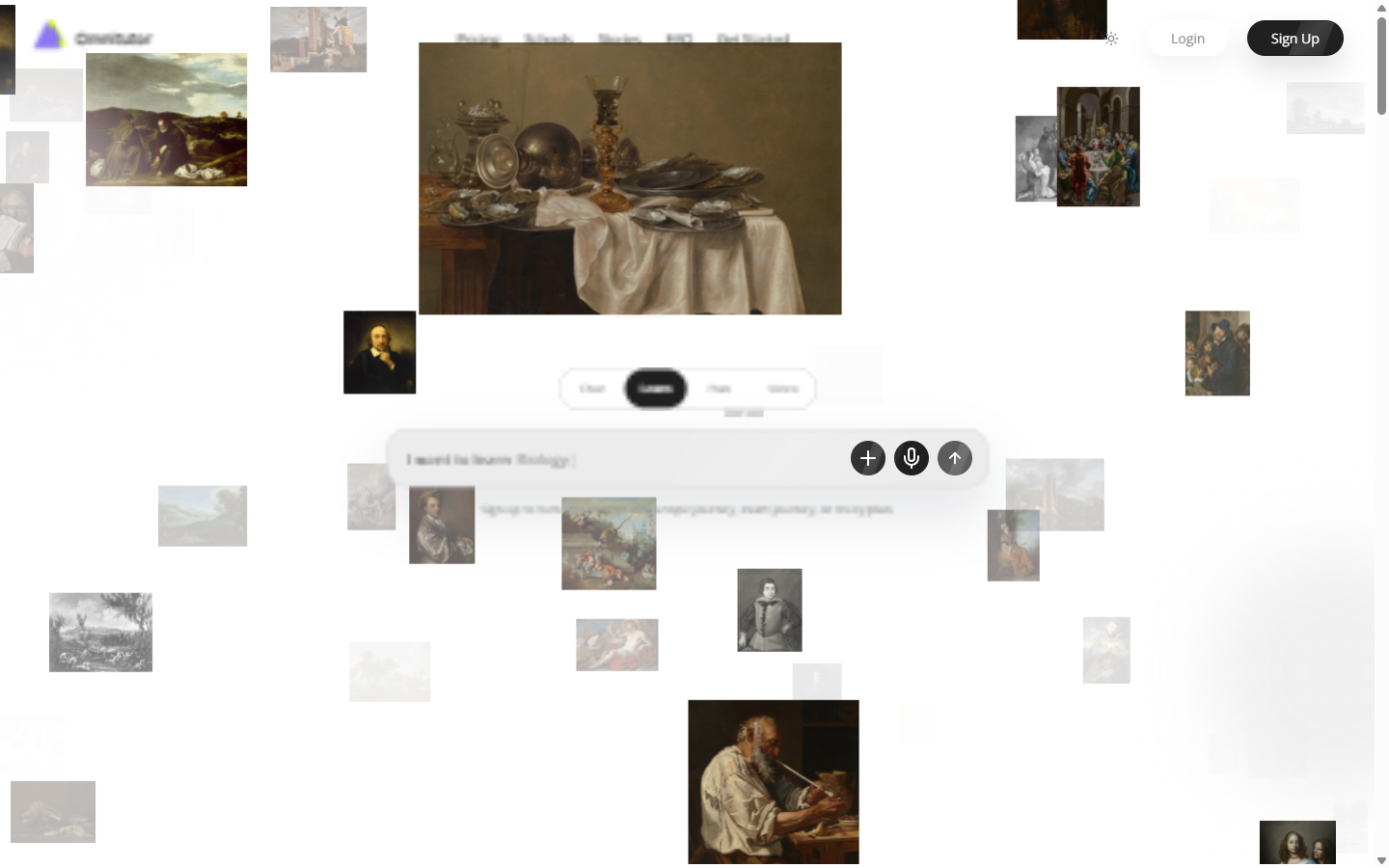
The OmniTutor study hub with the AI prompt bar

The OmniTutor study hub — ask anything, get a course.

50,000+Learners
1.2MAI lessons
4.9/5Learner rating
28Exams covered

How it works

An AI tutor that actually tutors.

omnitutor.live
Mirrors and lenses - ray diagrams explained — real OmniTutor output
1

Ask anything

Stuck at 11pm before a test? Ask in chat or by voice. Answers are worked to your exam's style — not generic textbook copy.

2

Watch it explained

Every topic can become a short video lesson, generated for your chapter — with real examples and diagrams.

3

Follow a plan that adapts

A daily plan built from your syllabus's weightage. Miss a day? It rebalances instead of guilt-tripping.

The paper is 80 marks plus 20 internal, examined across physics, chemistry, and biology as one subject. Chemistry and biology together carry half the marks before physics is touched, so branch aversion is expensive. About half the paper is competency-based, wrapped in case-study contexts.

OmniTutor maps each chapter to whiteboard videos — rays bending at a lens, the nephron labelled layer by layer, electrons through a circuit — with practice in both MCQ and written formats, and recovery quizzes that re-serve the exact diagram, equation, or numerical you missed.

What is the Class 10 Science syllabus for 2026-27?

Thirteen chapters across physics, chemistry, and biology. Chemistry: chemical reactions and equations, acids bases and salts, metals and non-metals, carbon and its compounds. Biology: life processes, control and coordination, how do organisms reproduce, heredity. Physics: light — reflection and refraction, the human eye and the colourful world, electricity, magnetic effects of electric current, plus our environment.

The theory paper is 80 marks plus 20 internal, and the syllabus is taught as one subject but examined across all three sciences — a fact students realise too late when two of five long answers come from the branch they neglected. Rationalisation deleted periodic classification and sources of energy, so prune older question banks accordingly.

What is the unit-wise weightage for Class 10 Science?

Chemical substances carry 25 marks and the world of living another 25 — half the paper before physics is touched. Natural phenomena (light and the eye) carry 12, effects of current 13, and natural resources 5. The table below shows the split, indicative for the 2026-27 boards.

The reading: chemistry and biology together outscore physics by two to one, so a physics-averse student still cannot reach 90 without strong chemical equations and life-process diagrams. Balance study accordingly — every branch has guaranteed questions every year, and none of them is optional.

Class 10 science chapters from light to life processes on OmniTutor

Which topics are most important in Class 10 Science?

Chemistry: balancing equations, reactivity series, properties of acids and bases with salts, extraction of metals, and the ethanol-ethanoic acid reactions plus soap versus detergent in carbon chemistry. Practise writing them as equations with conditions — word answers alone lose marks the marking scheme gives for balanced equations.

Biology: nutrition and respiration diagrams, the human heart, nephron, transpiration, control and reflex action, reproduction in plants and humans with diagrams, and Mendel’s crosses in heredity. Physics: ray diagrams, mirror and lens formulas with sign conventions, eye defects and corrections, Ohm’s law and series-parallel resistance numericals, and magnetic field lines.

How do you study light — reflection and refraction — effectively?

Light rewards procedure over brilliance: fix the sign convention first (distances measured from the pole or optical centre, direction rules for mirrors and lenses), then drill the six standard ray diagrams until they are muscle memory. The lens and mirror formulas are trivial once signs are consistent — and a marks disaster when they are not.

The human eye chapter extends the same toolkit: defects, corrections, and the power of a lens numericals. OmniTutor’s light videos animate each ray as it bends, which is what finally makes the convention visible instead of memorised — students report ray diagrams becoming free marks.

OmniTutor product view

Is NCERT enough for Class 10 Science boards?

Yes — the paper is set from NCERT, diagrams included, and NCERT’s in-text questions reappear nearly verbatim across years. Add NCERT Exemplar for application stretch and previous years’ papers for pattern sense. Heavy reference books mostly reorganise the same content with more pages.

The one supplement worth its time: the official CBSE sample paper with its marking scheme, which shows exactly how diagram and step marks are distributed. Study the scheme, not just the answers — most students lose marks to presentation, not knowledge.

How does OmniTutor help with Class 10 Science?

Each concept arrives as a whiteboard video — a ray bending at a lens, current splitting in parallel resistors, the nephron labelled layer by layer — followed by practice in both MCQ and written formats. Every wrong answer schedules recovery: the specific diagram, equation, or numerical gets re-served until it sticks.

Lab-style questions and competency items get their own drills, and timed 80-mark mocks mirror the real paper with delayed scoring. The plan fits the three sciences into one calendar so none of them quietly waits for the last week before boards.

OmniTutor product view

Learners

They kept going. It shows.

★★★★★

The ray-optics video finally made sign conventions click — every diagram drawn with distances marked live. Lens questions went from my biggest fear to full marks in the pre-board.
VedClass 10 student, NagpurCBSE Class 10

★★★★★

Practising labelled diagrams of the heart and nephron until they were automatic changed my biology score. My teacher said my answer sheet finally looked like a topper’s.
SaraClass 10 student, DelhiCBSE Class 10

★★★★★

Electricity numericals used to die in unit conversions. The recovery quizzes kept re-serving them until my working was clean; series-parallel is now free marks.
FarhanClass 10 student, LucknowCBSE Class 10

Questions

Asked before you did.

Yes. The board paper, including diagrams, is drawn from NCERT, and in-text questions reappear nearly verbatim across years. Add Exemplar and previous years’ papers for pattern and application stretch; thick reference books add pages more than marks. Deleted topics from rationalisation are the main trap to prune from old material.

By writing, not reading: copy each equation with state symbols and conditions until recall is automatic, then self-test with the reactants only. Group by type — combination, decomposition, displacement, double displacement, redox — because the classification itself is a common exam question.

Effectively yes — the marking scheme allots marks to correct, labelled diagrams in questions on the heart, nephron, flower, eye, and reproductive systems. An unlabeled diagram earns nothing, and a labelled one can carry partial credit even when the text is thin. Practise drawing them to exam speed.

Electricity and light reliably carry the numerical share — Ohm’s law, power, heating, and mirror or lens formula calculations — typically a question each, plus embedded values inside case-study items. They are formula-level, so marks are lost to sign and unit slips more often than to difficulty.

Case studies and real-context items — a factory scenario testing acids and bases, a health case testing life processes — worth roughly half the paper under current policy. They reward concept transfer, not recall, so practise with case-style sets rather than plain one-line question banks.

Roughly equal, tilted by weakness rather than preference — the weightage (25 chemistry, 25 biology, 30 physics-led) does not license ignoring a branch. Weekly: one block each, plus a mixed paper fortnightly from December so the subject is practised as one exam, not three.

Start Class prep free tonight.

Free to start, no card needed. Your first AI course is minutes away.

Start free